Sgra-Snyan, Sketch 065

Sketch of the Sgra-Snyan

Sgra-Snyan; Tibet; 14th-16th Centuries; Wood, skin

Sgra-Snyan; Tibet; 14th-16th Centuries; Wood, skin

Description from the Metropolitan Museum of Art:

The ancient “silk route”, running from the Mediterranean to Sian in east central China, made Central Asia a meeting place of many cultures. This lute, an extraordinary example of musical exchange between East and West, is similar to instruments played by angels depicted in seventh-century Buddhist cave paintings. It offers some insight into the development of the modern sgra-snyan. The body, with two skin-covered chambers, is a rare example of an archaic transitional form that seems to point to the Afghan robab, and various Himalayan lute types. Decorative elements, such as green-colored skins, like those of the damarn, and the portraits of Buddha and musicians, rendered on painted ivory with gold leaf, are typical of fifteenth-century Tibet. The back, fingerboard, and pegbox reveal cartouches and palmettes reminiscent of seventeenth-century Persia. Tin leafing shows through as a silvery underlayer in a worn section of the instrument. Painted gesso adheres to the surface, the result of an ancient gilding process known as adoratura. Originally, there were six strings attached to this instrument, but the pegbox was shortened to accommodate five, with a possible sixth string attached to a side peg. Despite the appearance of Buddha and his musicians, the sgra-snyan was not used in religious settings, but accompanied secular song.

Sketch 065: Sgra-Snyan, Metropolitan Museum of Art, Purchase, Clara Mertens Bequest, in memory of André Mertens, 1989

Belted Kingfisher

My hiking group took a field trip to the Nalle Bunny Run Wildlife Preserve. This reserve was donated to the Hill Country Conservancy by the Nalle family in honor of Anne Byrd Nalle and her love of nature. They give guided tours once a month. Our guide was Michael and he is quite knowledgeable about birds. He listed 33 birds he identified by sight or sound during our walk. My brief claim to fame from the walk is getting this blurry photo of a Belted Kingfisher as it flew nearby, over the Colorado River.

Photo of a Belted Kingfisher in flight

Look! It’s a bird! It’s a plane! Wait, it IS a bird!

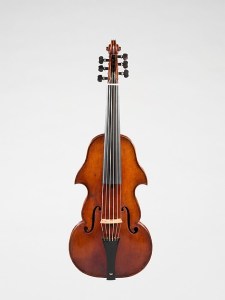
Viola d’Amore, Sketch 064

What a nice name: Viola d’Amore.

Sketch of the Viola d'Amore

by Giovanni Grancino, 1710; Milan, Italy; Spruce, maple, ebony, bone

by Giovanni Grancino, 1710; Milan, Italy; Spruce, maple, ebony, bone

Description from the Metropolitan Museum of Art:

The instrument represents the early form of the viola d’amore, which was strung already with metal strings but not yet with sympathetic strings. The oldest written evidence for the early viola d’amore is a remark by the English diarist John Evelyn, who in 1679 called it a new instrument, strung with five metal strings and “sweet” in its sound. The early viola d’amore was not standardized in form or in number of strings and tuning. Three other instruments of the same festoon shape survive from Grancino’s workshop, but each is a somewhat different size and has a different numbers of strings. The only instrument with its original neck has four strings, two others have five, and this one has been restored—apparently correctly—with six strings. Grancino is often considered the most renowned maker of his generation outside Cremona.

Sketch 064: Viola d’Amore by Giovanni Grancino, Metropolitan Museum of Art, Purchase, Amati Gifts, 2008

Looking Up: Fiction Friday

Friday Fictioneer Challenge: Write a 100-word story based on the photo.
~~~~~~~~~~~~~~~~~~~~~~~~~~~~~~~~~~~~~~~~~~~~~~~~~~~~~~~~~~~~~~~~~~~~~~~~~~~~

Friday Fictioneer prompt.  Copyright Lauren Moscato

Friday Fictioneer prompt. Copyright Lauren Moscato

Things Were Looking Up

“Been there, done that,” George’s father, Alvin, said, after he caught George climbing in the bedroom window just before dawn, again. It was all George could do not to roll his eyes; he knew the lectures by heart.

The good news: they were moving and, Alvin said, smiling, one bedroom had a separate entrance that would be George’s.

That’s more like it, George thought, dreaming of telling his friends how he was going to have his own door to come and go as he pleased. No more answering to his old man as to his whereabouts. Things were looking up.

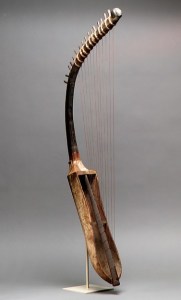
Arched Harp, Sketch 063

Sketch of the shoulder harp from Egypt

circa 1390-1295 BCE; Egypt; wood

circa 1390-1295 BCE; Egypt; wood

Description from the Metropolitan Museum of Art:

Egyptian arched harps from Dynasty 4 onward coexisted with a great variety of harps in different shapes and sizes. Two harp types were most common—the arched harp with a curved neck, like this one, and the angled harp with a neck sharply perpendicular to the body. Unlike most European versions, ancient Egyptian harps have no forepillars to strengthen and support the neck. Older forms of arched harps had four or five strings, this harp has twelve strings. Skin once covered the open, slightly waisted sound box. Rope tuning rings under each string gave a buzzing sound to the soft-sounding tone produced. Topping the arched frame of the harp is a carved human head.

Sketch 063: Arched Harp, Metropolitan Museum of Art, Rogers Fund, 1943