Alias Venus Flytrap

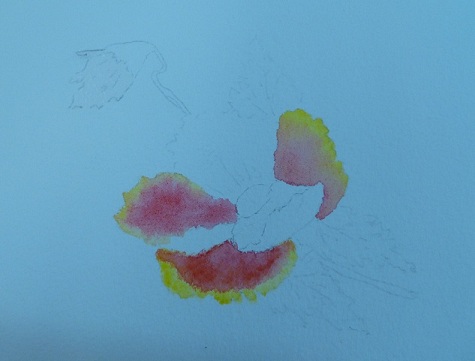
poppy watercolor in progress, photo 1

Traced and painting started

Last weekend I was very busy art-wise. On Saturday Ticka and I worked on our Longhorn appliqués. Sunday I was back at Ticka’s playroom for a watercolor session.

Just as a reminder, here’s how I paint. I show up with my purse and maybe a snack. To start, I trace the image onto the watercolor paper. Next, I pick up the paint brush my instructor, Etta (Ticka’s sister), says to pick up. I dip it in the paint color she indicates. I place the paint on the paper where she points to. Repeat the brush and paint motion until the watercolor is finished.

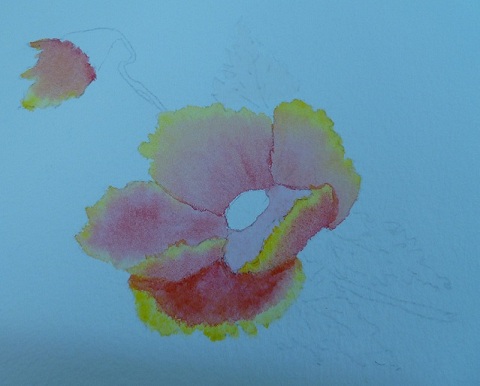
poppy watercolor in progress, all petals with some paint

All petals started

Yes, that is how I paint. I walk in with a purse and walk out with a purse and a painting. Art is fun!!

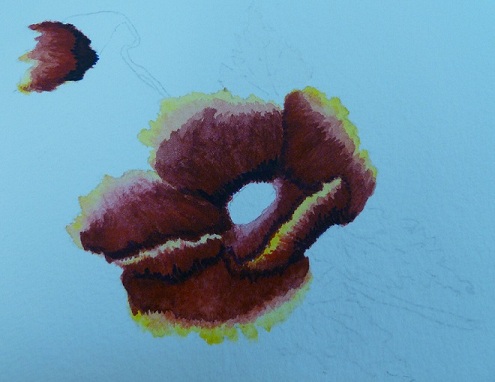
poppy watercolor in progress, petals all painted in

Hmm, sort of a red poppy

.
.
.
.
.
.
.
.
.
.

Somehow the red in mine didn’t quite turn out like I thought it should. It ended up looking somewhat like a juvenile, multi-petaled Venus Flytrap.

poppy watercolor, finished and framed

Poppy? Pansy? Venus Flytrap?

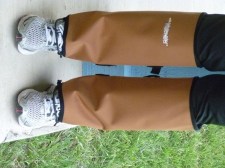
Snake-Proof Gaiters

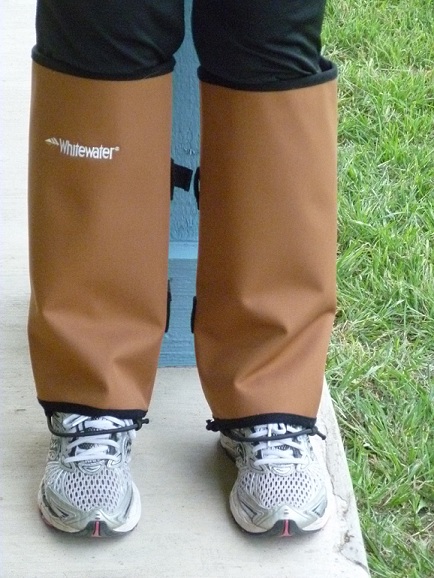
Snake Proof Gaiters

All dressed up

I now own a pair of snake-proof gaiters. I bought them at Cabela’s after I found a snake immediately outside my back door.

The dogs found the snake, actually, not me. I could hear their barking-at-something bark and went to investigate. I expected to see them at the fence, looking out at the road at a loose dog or someone riding by on a bicycle or horse.

Wrong again.

They were in a pack formation, four dogs gathered around a snake coiled up in the corner. Somehow I managed to call the dogs off and got them in the house. I was worried that it was a rattlesnake and that the dogs had been bitten. Over the years, we’ve had at least six dogs with rattlesnake bites. (They all survived their snake bites. Most had been vaccinated for just such an occurrence, but even the ones that weren’t vaccinated survived because we got them to the vet in time.) I was also worried about what I was going to do with a rattlesnake outside my back door. I couldn’t just shoo it away or leave a trail of treats to coax it to leave the yard in the direction that was best for both of us.

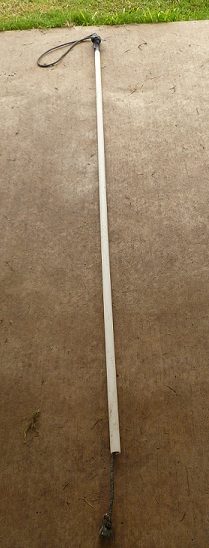
Snake Catching Stick

Snake Catching Stick

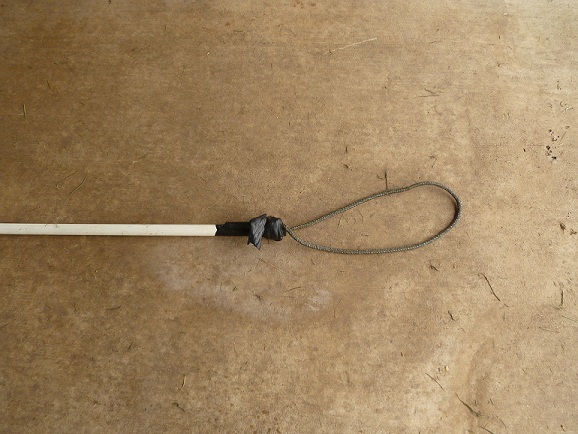
Fortunately, it wasn’t a rattlesnake. It wasn’t any kind of poisonous snake. However, it was still a snake, a full-grown snake — probably a rat snake — and it was still in the corner of the house right outside my back door. I retrieved the snake-catching noose that hubby put together a few years ago.

I caught the snake in the noose. Then I realized I had not opened any gate and now I had my hands full. I had to put the snake back in the corner, open a gate, then recapture the snake.

It was at least four feet long and it did not like being in that noose. It coiled and coiled around the noose while I carried it out to the front pond, apologizing to it all the way, hoping I wasn’t hurting it, but explaining that I couldn’t leave it where it was. I let it go and wished it well.
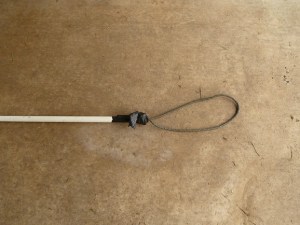
Snake Catching Noose

Snake Catching Noose

.
That evening I went to Cabela’s and bought my newest fashion accessories: snake-proof gaiters. The information on the tag said that the gaiters were successful in guarding against simulated snake bites.

That’s odd, because all the snake bites around my house are real.

Longhorn, Session 1

At the end of March, my friend Ticka and I took an appliqué class in Wimberly, Texas. There were about 20 students in the class. Each of us chose one of the instructor’s patterns to work on. Ticka and I chose the Longhorn pattern.

My goal was to finish the Longhorn appliqué for hubby’s birthday present in September. By the end of the class, I’d extended that time frame to Christmas . . . 2013.

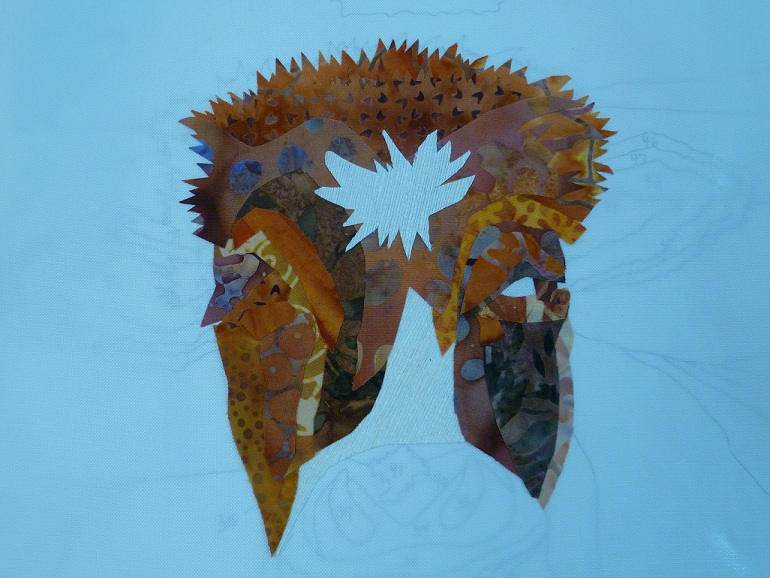
However, Ticka and I did not give up hope. We scheduled a work session for the Longhorn. In the March class, I managed to cut out six pieces (out of about 50 for the Longhorn head). By the end of the first work session last weekend, I had 25 pieces cut and arranged. Here is the result. You can see the pattern tracings underneath the appliqué pressing sheet. We have another work session scheduled for the end of May.

I’ve named my Longhorn-in-progress Dippity-Do, because I cut his top hair with spiked points and it looks like he is wearing Dippity-Do.

The start of a longhorn applique

Dippity-Do