General Reader

Non-professional reader, general reader: two terms I came across recently in books that I read that described the book’s audience.

I think they are talking about me.

I found the “non-professional reader” term in the acknowledgements for The Peloponnesian War by Donald Kagan, about the three decades of war between Athens and Sparta (with a cameo appearance by the Persian Empire), 431-404 BC.

The Peloponnesian War

The Peloponnesian War

The “general reader” term came from Your Brain on Cubs, Inside the Heads of Players and Fans, a compilation of scientific essays edited by Dan Gordon of the Dana Foundation. From the front inside book jacket: “The contributors to Your Brain on Cubs introduce us to the role of the brain, not just in these emotions, but in many aspects of watching and playing sports.” “Emotions” referring to “a come-from-behind win and the equally powerful crush of a disappointing loss.”


Your Brain on Cubs

Your Brain on Cubs

After thinking about it, I came up with my own definition of “non-professional reader” and “general reader”: A reader who is not a specialist in the field of a book’s subject.

Okay, now I know they are talking about me. I’m not a historian or a scientist, but I seek out books in those (and other) fields.

What was most fascinating to me about the Peloponnesian war is that the leaders of Athens and Sparta, Pericles and King Archidamus II, respectively, did not want to engage in war, yet it happened anyway. After three decades of war [spoiler alert], Athens surrenders. Sparta’s reigning regime is relatively short-lived, however, as a few years after that, Philip II of Macedon comes along and conquers both of them (and a whole lot more) and his son, Alexander the Great continues the empire’s expansion. So much for the Greek independent states.

And while it took about 30 years for Sparta to conquer Athens, the Chicago Cubs haven’t won a World Series title since 1908. I had great hopes for them in the 2008 season (the Cubs, not Athens or Sparta), thinking they could win on their 100-year anniversary. Didn’t happen, but I haven’t given up.

The first essay in Your Brain on Cubs is The Depths of Loyalty, Exploring the Brain of the Die-hard Fan by Jordan Grafman, Ph.D. I’ve never met Dr. Grafman, yet there I am in his essay. Another essay, Baseball and Handedness by Kenneth M. Heilman talks about left-handedness, right-handedness, along with left-eye and right-eye dominance. What does it all mean? Turns out, it means a lot in how and when a batter sees the pitched ball and its trajectory towards home plate.

The Forest Unseen book cover

The Forest Unseen

Fascinating, just fascinating. So to all the historians, scientists, and other specialists out there: Keep writing for me! I’m reading as fast as I can and I’ll get to your specialty soon!

Now that I think about it some more, I just love being a non-professional, general reader. My next book in the general reader category: The Forest Unseen, A Year’s Watch in Nature by David George Haskell. Looking forward to it!

Churchillian Drift

Success is not final, failure is not fatal: it is the courage to continue that counts. ~ Sir Winston Leonard Spenser Churchill (1874 – 1965). Or not.

I was just about to post this quote from Sir Winston Churchill when I came across the Quote Magnet blog post from Grammarphobia by Patricia T. O’Conner and Stewart Kellerman. I learned that some public figures have had quite a few utterances attributed to them that — gasp! — they never said.

I am crushed. Especially as the “Success is not final …” quote is one that has Sir Churchill’s name attached to it, but not in any place that attributes it to him. In fact, after I read the Quote Magnet post, I acquired a book of Churchill quotes, Churchill by Himself, The Definitive Collection of Quotations edited by Richard Langworth, a Churchill historian. And in it, there in black and white in the Red Herrings: False Attributions chapter on page 580 is the “Success is not final” quote followed by the statement “No attribution.

Rats! I really like the quote and I really like Sir Winston Churchill but never the twain did meet.

Speaking of Twain, Mark Twain, that is, he is another person who didn’t say some of the things we find with his name on them. The Quote Magnet blog post starts with an inquiry about a quote supposedly from Mark Twain: “If you always tell the truth, you don’t have to remember anything.” No direct attribution to him as far as anyone can find. He is another example of a quotation magnet, “a term,” the Grammarphobia blog explains, “coined by Fred Shapiro, author of The Yale Book of Quotations, for people often credited with saying things they never said.”

Sir Churchill, it seems, has so many quotations falsely attributed to him that there is a term for it: Churchillian Drift. A couple of other quotations Sir Churchill didn’t say, according to those in the know: “Every dog has his day” and “I am just preparing my impromptu remarks.”

The Internet makes it oh-so-easy for false attributions to take on a life of their own. I found the “Success is not final” quotation on the Internet and thought nothing of believing it without any verification. Now I know better.

Caveat lector, if you get my drift.

Memory Foam

Hubby went to a big box store to buy dog food. Hubby came home with dog food and new pillows, memory foam pillows. They must have jumped off the shelf right into his cart and he was wheeling by. “They were on sale,” he said. Oh, that explains it. I’m glad he didn’t notice the reduced price for the trampoline. We would have a terrible time keeping the dogs off of that!

Memory foam pillows. The insert says “So now you can rest easy, and enjoy the sleep of your dreams!

What I’m wondering about is the “memory” part. Will my new pillow make my memory better, increase its capacity? I’m looking at the pillow like the clichéd half-filled glass and thinking, “Sure. Why not?

This memory foam pillow may be the breakthrough all students throughout history have been waiting for: the ability to put a book under one’s pillow and absorb its contents while asleep. I’m liking this idea more and more.

Pillow and book

My magic memory foam pillow and book to put under it

Here’s the first book I’m going to put under my magic memory foam pillow (already in its pillowcase): The Second World War, Volume 1, The Gathering Storm by Sir Winston Churchill.

Yessiree, come the morning, I’m going to be one smart cookie. That’s my plan.

Hope there’s not a pop quiz first thing tomorrow. I want to keep my delusions a bit longer than that.

Books, in all their variety, offer the human intellect the means whereby civilisation may be carried forward triumphantly. ~ Sir Winston Churchill, 1937, in a statement for the National Book Fair.

Reality Shows

Recently I’ve started watching a few TV reality shows. I watch them intermittently, but they still hold that staring-at-a-car-wreck fascination.

The first one that got me hooked was Restaurant: Impossible. Chef Robert Irvine swoops in with $10,000 for a 2-day makeover of the decor, the menu, the wait staff, and the owners. Chef Robert finds dangerous kitchen environments, equipment that looks like it has never been cleaned, wait staff who ignore their customers and owners who are afraid to say “Boo!” to anyone. Those restaurants need miracles to stay in business and Chef Robert and his team deliver.

One day, out of inertia, I kept the TV on and watched the show that followed, which turned out to be Restaurant: Stakeout. My, my, my. Willie Degel comes in with hidden cameras and catches the staff goofing off, eating, drinking and carousing. When Willie confronts them with their unacceptable behavior, that’s when it gets interesting. They deflect, they rationalize yelling at customers, they lie. Willie sits them down, gives them a Good Talking To and most come around to embrace professional behavior.

Then there is the show Mystery Diners. Charles Stiles and crew also go in with cameras, only they are called in when there is some monetary discrepancy, maybe a business is losing $4,000 (or more) per month and the owner doesn’t know where it’s going.

The cameras record employees putting money in their pockets, leaving the business unattended, drinking on the job, fighting, serving alcohol to minors, and so on. And when the owners confront these employees, they also deflect, lie, deny. Some are fired right on the spot, rationalizing their actions all the way to their car with the cameras following them.

The restaurant world is a rough one.

However, with all those uncleaned appliances, dangerous food handling, and cocky waitstaff, one might get a little leery of going out to eat. Maybe I should change to the Travel Channel and watch shows where they spotlight restaurants in a good way. Or better yet, cook my own meals and read a good book instead of watching TV.

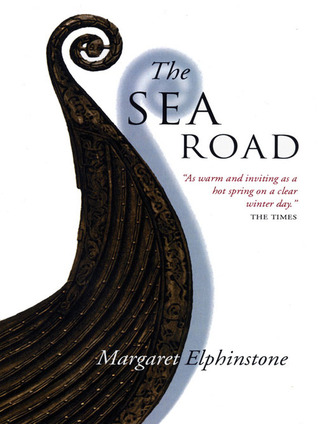
Last night I made vegan mashed potatoes and read part of The Sea Road by Margaret Elphinstone. It’s a start.

Weekly Photo Challenge: Love

Love: warm, chewy cookies right out of the oven and a good book. It just doesn’t get any better.

I didn’t get to taste these wonderful peanut butter cookies fresh from the ovens of Tiff’s Treats. I bought them as a Thank You for a co-worker. But it was nice driving home with that aroma filling up my vehicle.

Yummy cookies from Tiff's Treats

Yummy cookies from Tiff’s Treats

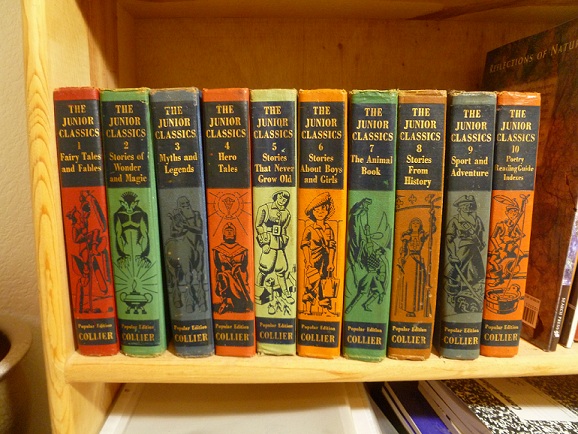
I recently rescued these books from the storage shed. I was so happy to find them. I remember reading the whole set as a youngster and being enthralled with the stories. They are next on my to-(re)-read list. And then I’ll return to Tiff’s Treats to get some cookies for myself.

I think I’m in love.

A set of Junior Classics books

The Junior Classics

Weekly Photo Challenge: Love