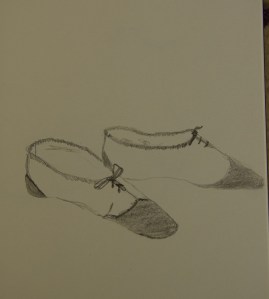
Day Shoes, Sketch 068

Sketch of the day shoes

Looks like something I’d wear

1840-1849; American; cotton, leather

1840-1849; American; cotton, leather

Description from the Metropolitan Museum of Art:

While fancy evening shoes were saved in abundance, surviving day shoes are relatively scarce. The leather tip and foxing of these tie shoes was a common style for daywear in the 1840s, and renders an otherwise flimsy and thin shoe more serviceable. The self-patterned cotton provides an interesting textural contrast with the leather. Neutral colors such as tan, brown, and the dull mauve seen here, were favored at the time.

Sketch 068: (Day) Shoes; Metropolitan Museum of Art; Brooklyn Museum Costume Collection at The Metropolitan Museum of Art, Gift of the Brooklyn Museum, 2009; Gift of the Jason and Peggy Westerfield Collection, 1969

Silk Shoe, Sketch 067

Sketch of the silk shoe

Wonder what my shoes would look like if I created my own embroidery patterns

1720-1749; Silk; probably British

1720-1749; Silk; probably British

Description from the Metropolitan Museum of Art:

Through most of the 18th century, fashionable ladies’ shoes were seldom made of plain fabrics. The majority were constructed with patterned fabric, whether self-figured, brocaded, or embroidered. It was not uncommon for a lady to embroider her own uppers and bring them to the shoemaker to be made up into shoes. By the last quarter of the 18th century, embroidery patterns for shoe vamps were being published in ladies magazines. This shoe in the classic shape of the period is a representative example of early 18th century domestic needlework in a popular Indian-inspired floral design. In some areas the embroidery has worn away, showing how the design was first drawn on the fabric in pencil.

Sketch 067: Silk Shoe; Metropolitan Museum of Art; Brooklyn Museum Costume Collection at The Metropolitan Museum of Art, Gift of the Brooklyn Museum, 2009; Gift of Herman Delman, 1954

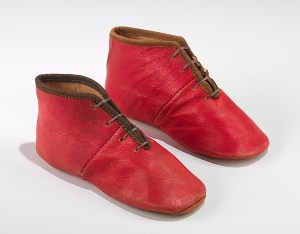
Baby Shoes, Sketch 066

Sketch of baby shoes

Red Leather Baby Shoes; 1840-1849; American

Red Leather Baby Shoes; 1840-1849; American

Description from the Metropolitan Museum of Art:

Owing to their diminutive cuteness and sentimental connection to purity and innocence, baby shoes survive in family collections in great number. Although arresting to modern eyes, the original strong color, perfectly preserved on this pair of shoes, was not particularly uncommon in the 19th century. It is precisely this quality of surprise to current expectations (along with the very good general condition) that make these shoes of interest in a museum context.

Sketch 066: Baby Shoes; Metropolitan Museum of Art; Brooklyn Museum Costume Collection at The Metropolitan Museum of Art, Gift of the Brooklyn Museum, 2009; Gift of The Jason and Peggy Westerfield Collection, 1969

Sgra-Snyan, Sketch 065

Sketch of the Sgra-Snyan

Sgra-Snyan; Tibet; 14th-16th Centuries; Wood, skin

Sgra-Snyan; Tibet; 14th-16th Centuries; Wood, skin

Description from the Metropolitan Museum of Art:

The ancient “silk route”, running from the Mediterranean to Sian in east central China, made Central Asia a meeting place of many cultures. This lute, an extraordinary example of musical exchange between East and West, is similar to instruments played by angels depicted in seventh-century Buddhist cave paintings. It offers some insight into the development of the modern sgra-snyan. The body, with two skin-covered chambers, is a rare example of an archaic transitional form that seems to point to the Afghan robab, and various Himalayan lute types. Decorative elements, such as green-colored skins, like those of the damarn, and the portraits of Buddha and musicians, rendered on painted ivory with gold leaf, are typical of fifteenth-century Tibet. The back, fingerboard, and pegbox reveal cartouches and palmettes reminiscent of seventeenth-century Persia. Tin leafing shows through as a silvery underlayer in a worn section of the instrument. Painted gesso adheres to the surface, the result of an ancient gilding process known as adoratura. Originally, there were six strings attached to this instrument, but the pegbox was shortened to accommodate five, with a possible sixth string attached to a side peg. Despite the appearance of Buddha and his musicians, the sgra-snyan was not used in religious settings, but accompanied secular song.

Sketch 065: Sgra-Snyan, Metropolitan Museum of Art, Purchase, Clara Mertens Bequest, in memory of André Mertens, 1989

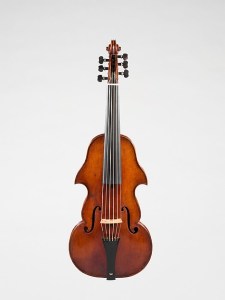
Viola d’Amore, Sketch 064

What a nice name: Viola d’Amore.

Sketch of the Viola d'Amore

by Giovanni Grancino, 1710; Milan, Italy; Spruce, maple, ebony, bone

by Giovanni Grancino, 1710; Milan, Italy; Spruce, maple, ebony, bone

Description from the Metropolitan Museum of Art:

The instrument represents the early form of the viola d’amore, which was strung already with metal strings but not yet with sympathetic strings. The oldest written evidence for the early viola d’amore is a remark by the English diarist John Evelyn, who in 1679 called it a new instrument, strung with five metal strings and “sweet” in its sound. The early viola d’amore was not standardized in form or in number of strings and tuning. Three other instruments of the same festoon shape survive from Grancino’s workshop, but each is a somewhat different size and has a different numbers of strings. The only instrument with its original neck has four strings, two others have five, and this one has been restored—apparently correctly—with six strings. Grancino is often considered the most renowned maker of his generation outside Cremona.

Sketch 064: Viola d’Amore by Giovanni Grancino, Metropolitan Museum of Art, Purchase, Amati Gifts, 2008