Viola d’Amore, Sketch 064

What a nice name: Viola d’Amore.

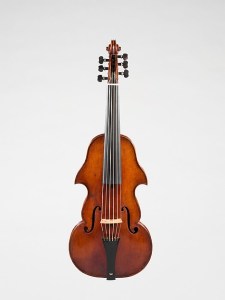
Sketch of the Viola d'Amore

by Giovanni Grancino, 1710; Milan, Italy; Spruce, maple, ebony, bone

by Giovanni Grancino, 1710; Milan, Italy; Spruce, maple, ebony, bone

Description from the Metropolitan Museum of Art:

The instrument represents the early form of the viola d’amore, which was strung already with metal strings but not yet with sympathetic strings. The oldest written evidence for the early viola d’amore is a remark by the English diarist John Evelyn, who in 1679 called it a new instrument, strung with five metal strings and “sweet” in its sound. The early viola d’amore was not standardized in form or in number of strings and tuning. Three other instruments of the same festoon shape survive from Grancino’s workshop, but each is a somewhat different size and has a different numbers of strings. The only instrument with its original neck has four strings, two others have five, and this one has been restored—apparently correctly—with six strings. Grancino is often considered the most renowned maker of his generation outside Cremona.

Sketch 064: Viola d’Amore by Giovanni Grancino, Metropolitan Museum of Art, Purchase, Amati Gifts, 2008

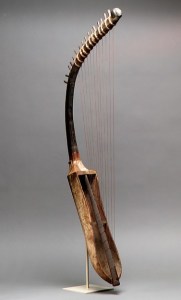
Arched Harp, Sketch 063

Sketch of the shoulder harp from Egypt

circa 1390-1295 BCE; Egypt; wood

circa 1390-1295 BCE; Egypt; wood

Description from the Metropolitan Museum of Art:

Egyptian arched harps from Dynasty 4 onward coexisted with a great variety of harps in different shapes and sizes. Two harp types were most common—the arched harp with a curved neck, like this one, and the angled harp with a neck sharply perpendicular to the body. Unlike most European versions, ancient Egyptian harps have no forepillars to strengthen and support the neck. Older forms of arched harps had four or five strings, this harp has twelve strings. Skin once covered the open, slightly waisted sound box. Rope tuning rings under each string gave a buzzing sound to the soft-sounding tone produced. Topping the arched frame of the harp is a carved human head.

Sketch 063: Arched Harp, Metropolitan Museum of Art, Rogers Fund, 1943

Lute, Sketch 061

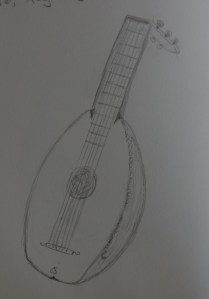
Sketch of the Lute

Maybe could make music

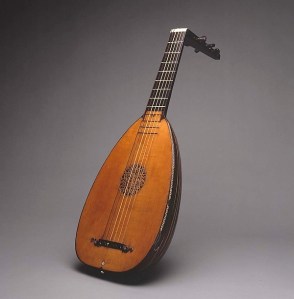
1596; Augsburg, Germany; Wood, various other materials

1596; Augsburg, Germany; Wood, various other materials

Description from the Metropolitan Museum of Art:

The back of this Renaissance lute is constructed of twenty-five ebony or rosewood ribs with ivory spacers, and its top is Alpine spruce. It was probably originally made for seven or eight courses (pairs) of strings, but in the seventeenth century the neck, bridge, and pegbox were replaced or modified to give the instrument a Baroque configuration. In the nineteenth century, the neck was reduced, fixed frets were added, and the instrument was changed to six-strings, like on a guitar.

Sixtus Rauchwolff had an excellent reputation in his day and was a maker of lutes for the prominent Fugger family and the court orchestra in Stuttgart. A label inside the instrument identifies him as the maker and 1596 as the date of the lute. The name of Matthias Hummel, who probably made the Baroque alterations to the instrument, also appears.

Sketch 061: Lute, Metropolitan Museum of Art, Gift of Joseph W. Drexel, 1889

Melophone, Sketch 060

Sketch of the Melophone

Somewhat skewed

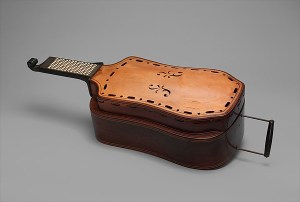
circa 1850–1855; Paris, France

circa 1850–1855; Paris, France

Description from the Metropolitan Museum of Art:

The melophone, which was invented in Paris in 1837, was developed for classical music. The inventor, the music-box maker Pierre Charles Leclerc, persuaded the composer Fromentin Halévy to include a melophone solo in his opera Guido et Ginevra in 1838-and this opened the doors to the salons of many Paris opera patrons. But the success of the melophone was modest; its use declined, and it fell out of style in the 1850s and 60s. Beside its occasional use in the salons in France, it was also known in Italy and southern Germany.

The melophone is a free-reed instrument related to accordions, concertinas, reed organs, and harmonicas. The setup, with a double bellows and a push-and-draw lever, allows the player to perform tremolo and staccato, soft and loud. The thumb lever is an octave coupler. The fingering mechanism imitates the technique of violin and guitar, making it easy for string players to play the melophone. The eight vertical rows of the fingering mechanism correspond to strings tuned in fifth, and the thirteen individual buttons correspond to the half steps.

Sketch 060: Melophone, Metropolitan Museum of Art, The Crosby Brown Collection of Musical Instruments, 1889